Responsible AI: What AWS Training Taught Me
August 7, 2026
I spent the last few weeks going through AWS training on the responsible use of Artificial Intelligence, part of my preparation for the AWS Certified AI Practitioner certification. It isn’t content about models and prompts — it’s about how technical decisions affect people.
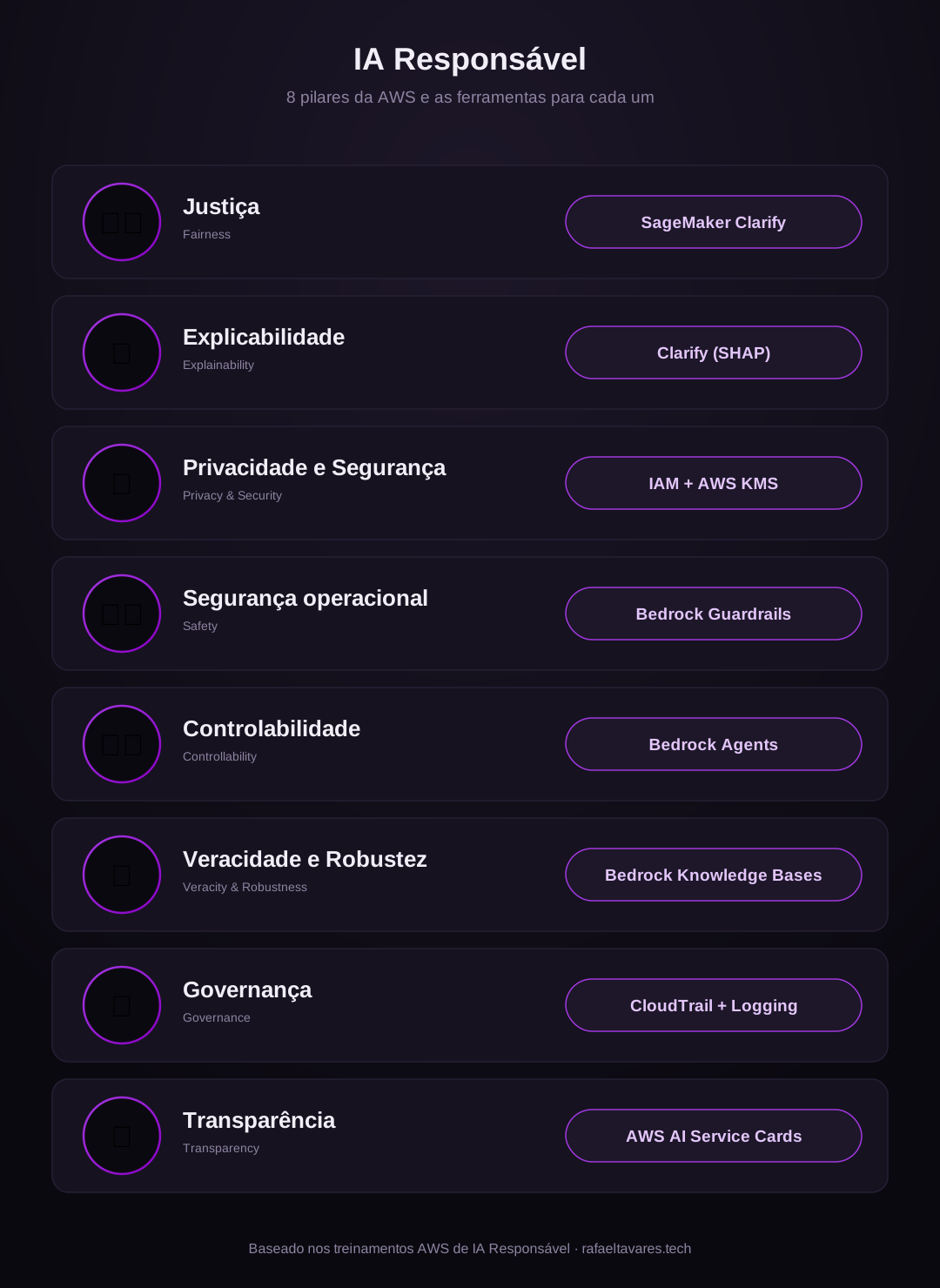
AWS organizes the topic into eight pillars, each answering a different question — and, in practice, each mapped to concrete tools in the AWS ecosystem:
- Fairness (who could this system harm?) → Amazon SageMaker Clarify, to detect bias in data and models.
- Explainability (can we explain why it made this decision?) → Clarify again, this time with SHAP-based feature attribution.
- Privacy and security (is the data protected?) → AWS IAM and AWS KMS, controlling access and encrypting data and models.
- Safety (does the system avoid harm and misuse?) → Guardrails for Amazon Bedrock, filtering toxic content and sensitive topics.
- Controllability (is anyone monitoring and able to intervene?) → Amazon Bedrock Agents, orchestrating and constraining model behavior.
- Veracity and robustness (does the system hold up under unexpected inputs?) → Amazon Bedrock Knowledge Bases, with RAG and source attribution to reduce hallucination.
- Governance (is there end-to-end traceability?) → AWS CloudTrail and Bedrock’s model invocation logging.
- Transparency (do people know they’re interacting with AI?) → AWS AI Service Cards, documenting each model’s limitations and intended use.
What struck me most wasn’t the list itself, but the idea behind it: responsible AI isn’t a review step at the end of a project. It’s a practice that runs through the entire lifecycle — from training data to production monitoring.
As a TechLead, that changes the question I ask in architecture reviews. It’s not just “does this work?” — it’s “who does this work for, and what happens when it fails?”